
Records That Outlived the Game That Set Them
Cy Young's 511 wins, the 1899 Spiders' 20-134, Johnny Vander Meer's back-to-back no-hitters — baseball's oldest surviving records and why they'll never fall.
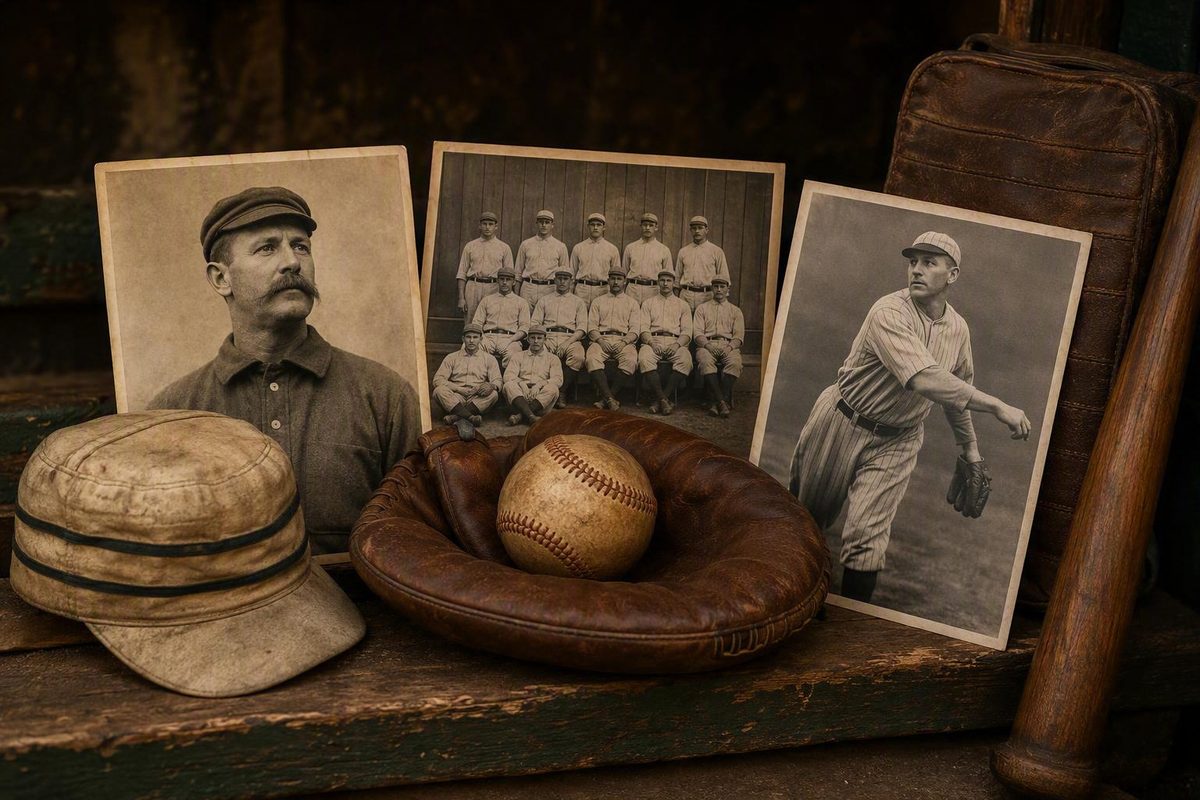
Baseball’s record book is the oldest continuously kept ledger in team sport, and its deepest shelf holds records that are not merely unbroken but unbreakable — set under conditions the modern game abolished. Here are the great survivors, and the era logic that fossilized them.
Cy Young’s 511 wins (career, 1890–1911)
The most famous unbreakable number. Young won 511 games in an era when a staff ace started 40+ games a year and finished what he started — Young threw 749 complete games, itself a record more untouchable than the wins. A modern ace with 34 starts and a bullpen behind him cannot mathematically approach either. Second place (Walter Johnson, 417) is closer to tenth place than to Young. The award is named after him because the number ended the argument.
The 1899 Cleveland Spiders: 20-134
The worst season ever played, and structurally unrepeatable: the Spiders’ owners also owned the St. Louis club and transferred every good player there before the season — syndicate ownership, banned shortly after. Cleveland finished 84 games out of first, drew crowds in the dozens, and played most of the “home” schedule on the road because opponents refused to travel for the gate. The modern tanking team loses 110 games with a plan; the Spiders lost 134 as a demolition.
Vander Meer’s consecutive no-hitters (1938)
Johnny Vander Meer threw no-hitters in back-to-back starts in June 1938. To break the record — not tie, break — a pitcher must throw three straight, which is why it’s routinely called the safest record in sport. It required no abolished era to set; it simply sits at the edge of what probability permits, and has for nearly ninety years.
The dead-ball residue
The pre-1920 game — dirty, misshapen balls, legal spitballs, cavernous parks — left a stratum of frozen records: Jack Chesbro’s 41 wins in a season (1904), Ed Walsh’s 1.82 career ERA, Chief Wilson’s 36 triples in 1912 (no one has reached 24 since World War II), and Sam Crawford’s 309 career triples. The lively ball didn’t just change the game; it sealed that entire wing of the record book behind glass.
Why baseball keeps them anyway
Other sports quietly retire incomparable records; baseball curates them. The sport’s continuous statistical record — every game since 1876 feeding one ledger — is its deepest identity, and the unbreakable records serve as boundary markers of what the game used to be. Nobody will win 512; that’s not the record’s failure but its function. It remembers a sport that no longer exists, in a book the current one still writes in.