
Three Steals Short: Where PCA’s Historic Chase Stood on September 15
At the September 15 checkpoint, PCA stood at 42 home runs and 37 stolen bases—three steals short. A dated tracker traces the chase.
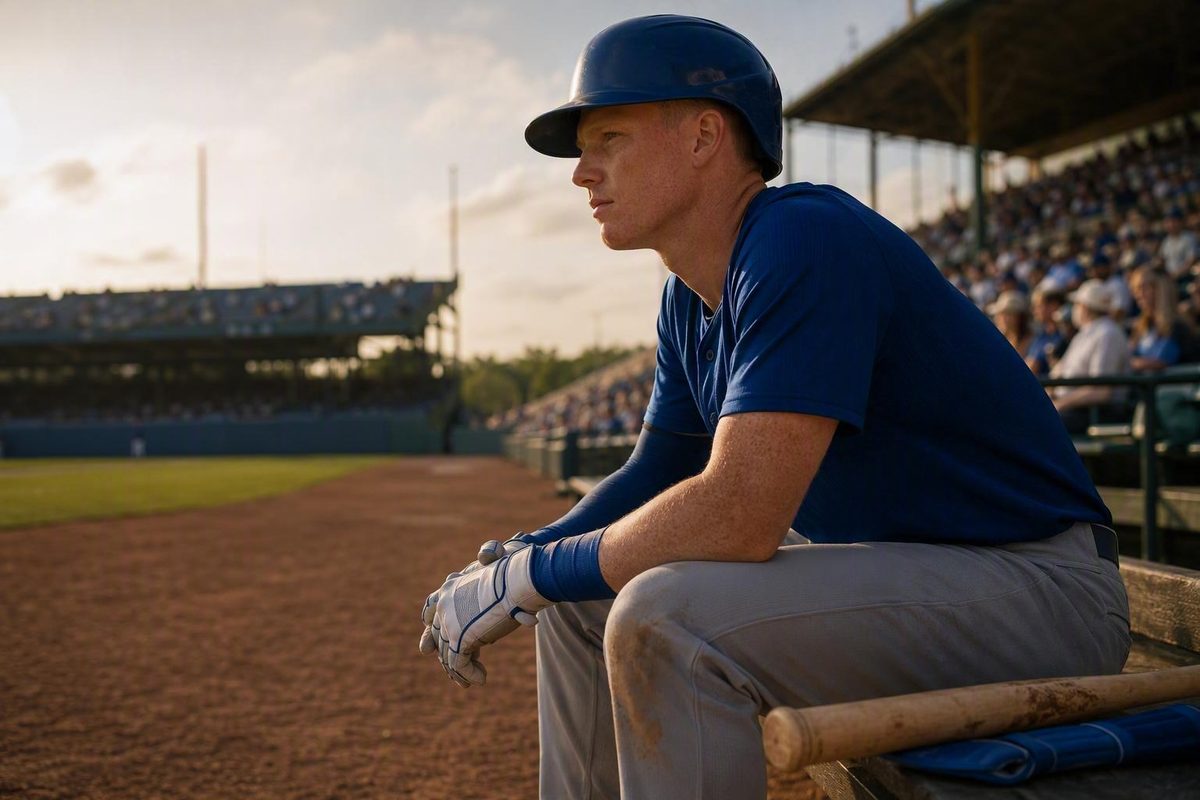
Pete Crow-Armstrong had not joined MLB’s 40-40 club as of the September 15, 2026 reporting checkpoint. After a four-hit game against Atlanta, the Cubs center fielder was reported at 42 home runs and 37 stolen bases, leaving him three steals short. This is an archival, date-stamped assessment—not confirmation of his current or final 2026 totals.
As of September 15: 42 HR, 37 SB — not yet 40-40. — September 15 reported totals
The answer: Crow-Armstrong had not yet reached 40-40
The record available through September 15 supports a narrow answer: Crow-Armstrong had completed the home-run half of the milestone but not the stolen-base half. A player needs both totals in the same season, and 37 steals remained short of the required 40.
His September 15 performance—4-for-5 with a two-run homer against Atlanta—raised his reported season line to 42 homers and 37 steals. It moved him closer to the threshold, but it did not supply the 40th stolen base necessary for membership.
The date is essential. Those numbers were an in-season snapshot rather than a final line, and the supplied record does not establish what happened after September 15. It therefore supports a historical statement about where the chase stood that day, not a claim about Crow-Armstrong’s status at the end of the season or at publication.
A date-by-date tracker of the 40-40 chase
Crow-Armstrong’s pursuit developed in stages. An early 25-25 pace established the scale of his power-speed season. A later 31-31 checkpoint left the two sides of the chase balanced. Once he reached 40 home runs, however, the remaining question concerned stolen bases.
| Checkpoint | Home runs | Stolen bases | Distance from 40-40 |
|---|---|---|---|
| After 92 games | 25 | 27 | 15 HR, 13 SB |
| With 35 games remaining | 31 | 31 | 9 HR, 9 SB |
| September 6 | 40 | 33 | 7 SB |
| September 8 | 41 | 35 | 5 SB |
| September 9 | 41 | 36 | 4 SB |
| September 15 | 42 | 37 | 3 SB |
The first major marker came after 92 games, when Crow-Armstrong had 25 home runs and 27 stolen bases. He was the fastest Cub to reach at least 25 in both categories and, according to MLB.com’s Sarah Langs, the fourth-fastest major leaguer to do so in a season. Only Eric Davis in 1987 and Alfonso Soriano and Bobby Bonds in their respective 2002 and 1973 seasons reached 25-25 in fewer games, according to MLB.com’s account of the 92-game checkpoint.
A later fan-oriented report placed him at 31 homers and 31 steals with 35 games remaining. That left him nine short in each category. The Bleed Cubbie Blue discussion presented 40-40 as an open question, not as a completed result or an official final record.
The pursuit changed on September 6. Crow-Armstrong hit his 40th home run but had 33 stolen bases, so the home-run milestone did not complete the paired achievement. By September 8, he had advanced to 41 homers and 35 steals. A September 9 account then reported him at 41 and 36, or four steals short of 40-40. The September 15 report narrowed the remaining distance to three steals.
These figures are not competing versions of one final record. Each represents the season after a different game. In a live milestone chase, the date is part of the statistic.
What qualifies a player for the 40-40 club?
A player qualifies by hitting at least 40 home runs and stealing at least 40 bases in the same season. Both thresholds must be reached.
That definition excludes several similar-looking accomplishments:
- A 40-homer, 30-steal season is not 40-40.
- Reaching 40 home runs without 40 steals is insufficient.
- Reaching 40 steals without 40 home runs is also insufficient.
- Statistics from separate seasons cannot be combined.
- Career totals do not establish a single-season achievement.
Contemporary coverage listed six players who had previously recorded a 40-40 season:
| Player | Season | Home runs | Stolen bases |
|---|---|---|---|
| Jose Canseco | 1988 | 42 | 40 |
| Barry Bonds | 1996 | 42 | 40 |
| Alex Rodriguez | 1998 | 42 | 46 |
| Alfonso Soriano | 2006 | 46 | 41 |
| Ronald Acuña Jr. | 2023 | 41 | 73 |
| Shohei Ohtani | 2024 | 54 | 59 |
Shohei Ohtani was the only player in that group whose qualifying season also reached 50 home runs and 50 stolen bases. The six historical lines were compiled in FOX Sports’ comparison of Crow-Armstrong with prior 40-40 players.
Crow-Armstrong’s possible place in that history must remain conditional. Had he subsequently reached 40 stolen bases in 2026 while retaining at least 40 home runs, he would have become the seventh distinct player listed in those accounts and the first Cub with a 40-40 season. As of September 15, the available evidence did not establish either distinction.
“Distinct player” is the careful formulation because the number of players and the number of qualifying seasons are not automatically the same measure. Any broader all-time count should distinguish first-time members from repeat qualifying seasons.
Why the season already mattered in Cubs history
Crow-Armstrong did not need a 40th stolen base for his home-run season to occupy an important place in Cubs history. His 40th homer made him the 10th Cubs player to hit 40 in a season. He also became the first left-handed Cubs batter to reach 40 since Billy Williams hit 42 in 1970, according to MLB.com’s report on the September 6 milestone.
He was also reported as the youngest Cub to reach 40 home runs. Crow-Armstrong was 24 years and 165 days old when he hit No. 40, making him 49 days younger than Ernie Banks had been when Banks reached the mark in 1955.
Those franchise distinctions were complete at the time they were reported. The 40-40 pursuit was not. A home-run record measures one part of a player’s season, while the power-speed club imposes a separate stolen-base requirement.
Keeping those records distinct prevents the drama of one milestone from doing more historical work than the numbers permit. Crow-Armstrong had already produced a rare Cubs power season. Reaching 40 steals would have added a different achievement—the first 40-40 season in franchise history—but that remained a possibility rather than an established result at the September 15 checkpoint.
Could it have ranked among the most valuable 40-40 seasons?
The chase drew attention for more than the two headline counting statistics. FOX reported Crow-Armstrong at 9.9 fWAR and 9.5 bWAR on September 8. Its comparison listed Barry Bonds’ 1996 season at 9.2 fWAR and 9.9 bWAR.
Those figures raised an intriguing possibility. Crow-Armstrong’s reported fWAR had already surpassed Bonds’ 1996 fWAR, while his bWAR remained below Bonds’ total in that separate system. If Crow-Armstrong completed 40-40 and maintained comparable overall value through the end of the season, his campaign could enter discussions about the strongest all-around seasons associated with the club.
It could not yet be called the best 40-40 season. On the date of the comparison, he still needed five steals. His WAR totals were also unfinished, in-season estimates rather than final values.
The two versions of WAR must remain separate. fWAR and bWAR use different models, so Crow-Armstrong’s 9.9 fWAR belongs in an fWAR comparison, while his 9.5 bWAR belongs in a bWAR comparison. Adding the two figures or switching between systems to produce a preferred ranking would distort the evidence.
What the dated estimates did suggest was that his value extended beyond home runs and stolen bases. Even so, an in-season WAR comparison was not proof of a completed 40-40 season, a final all-time ranking or an MVP result.
What would be needed to update the record
To establish that Crow-Armstrong joined the club, a post-September 15 official statistical record would need to show his 40th stolen base during the same 2026 season in which he had already hit at least 40 home runs.
A prediction cannot establish that result. Neither can a fan poll, a pace calculation, a headline forecasting that he would get there or career totals accumulated across multiple seasons. Those can document contemporary expectations, but membership depends on completed same-season counting statistics.
Accordingly, this article’s conclusion is limited to its stated date: Crow-Armstrong had already secured a notable place in Cubs home-run history, but the September 15 report left him outside the 40-40 club at 42 home runs and 37 stolen bases. Three additional steals would have changed that distinction; the supplied evidence does not show whether he recorded them later.