
How Salvador Perez Became the Royals’ New Home Run Leader
He tied George Brett at 317, passed him with No. 318 on July 25, and reached 322 by September 13, while separating career, season and playoff marks.
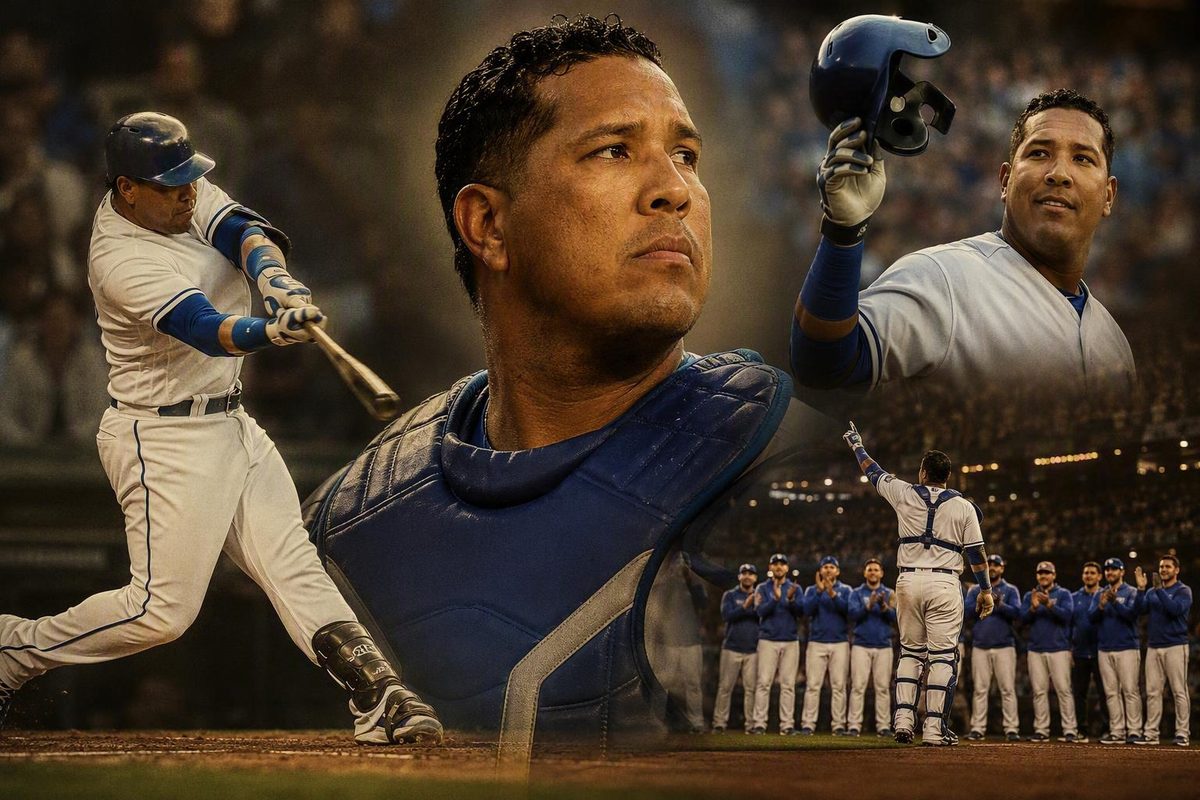
Salvador Perez is the Kansas City Royals’ sole career regular-season home run leader. He passed George Brett by hitting his 318th career homer on July 25, 2026, three days after tying Brett’s former franchise record of 317. KCTV5 reported that the record-breaking homer came in the seventh inning against Detroit at Comerica Park.
The essential distinction is that 318 was the home run that broke the record. Perez’s career total continued to rise afterward, so any larger number must be attached to the date on which it was recorded.
The answer: Perez broke the Royals record with home run No. 318
Perez became Kansas City’s outright career home run leader when he hit No. 318 on July 25, moving one ahead of Brett. By September 13, his regular-season total had risen to 322, but that was an in-season snapshot rather than the number attached to the record-breaking swing.
Royals career home run record at a glance
- Previous record: George Brett, 317
- Record-breaking milestone: Salvador Perez, 318 on July 25, 2026
- Later in-season snapshot: Perez, 322 through September 13, 2026
Those figures answer different questions. No. 318 identifies the moment the franchise record changed hands. The 322 figure describes how far Perez had extended the record by a later date.
The distinction matters because Perez remained active during the 2026 season. His total could change after any subsequent home run, while the historical event itself remained fixed: Brett’s record fell on Perez’s 318th homer.
Regular-season and postseason statistics must also remain separate. Through September 13, Baseball-Reference listed Perez with 322 regular-season home runs and six postseason home runs in distinct statistical records. The playoff total therefore is not added to the Royals’ career regular-season leaderboard. The dated Baseball-Reference record separates Perez’s regular-season and postseason totals.
Three days from a tie to sole possession
The record changed in a short, clearly dated sequence:
- July 22, 2026 — Perez ties Brett at 317. Perez hit a two-run homer in the seventh inning against the San Francisco Giants. The Royals won 5-4, leaving Perez and Brett together atop the franchise list.
- July 25, 2026 — Perez takes sole possession at 318. Three days later, he homered in the seventh inning against the Detroit Tigers at Comerica Park.
- September 13, 2026 — Perez’s total stands at 322. By this statistical checkpoint, he had added four home runs beyond the one that broke Brett’s record.
The July 22 reporting was accurate when published: Perez was then a co-holder, not yet the sole leader. MLB’s account documented the tying two-run homer, its seventh-inning timing and Kansas City’s 5-4 victory. MLB reported the record-tying details on July 22.
Three days later, the status changed. Perez’s next home run did more than increase his career total by one; it ended the tie and transferred first place to him alone. That is why contemporary pages may show 317, 318 or 322 without necessarily disagreeing:
- 317 was the total that tied Brett.
- 318 was the total that passed Brett.
- 322 was Perez’s total at a later point in the season.
This is a common feature of records held by active players. The milestone number remains permanent even as the leader builds on it. Future additions would expand Perez’s advantage, but they would not change which swing first put him ahead.
The Royals leaderboard at the record change
The relevant leaderboard can be reconstructed as a record-transition snapshot. It is not intended as a complete, permanently current ranking of every Royals hitter. ESPN’s July 22 report placed Perez and Brett at 317 apiece and Mike Sweeney next at 197. That dated ESPN account establishes the three-player comparison immediately before Perez moved ahead.
| Player | Royals career home runs | Date or context |
|---|---|---|
| Salvador Perez | 318 | July 25, 2026, after taking sole possession |
| George Brett | 317 | Previous franchise record |
| Mike Sweeney | 197 | Total reported July 22, 2026 |
Perez moved only one home run ahead of Brett when he established the new record. The distance to third place was much greater: when Perez and Brett shared first place at 317, each stood 120 home runs ahead of Sweeney’s reported total.
That separation helps explain the scale of the achievement without turning the table into a broader historical ranking. Perez was not emerging from a group of several hitters clustered around first place. He had reached a standard held by Brett while the next reported name remained more than a hundred home runs behind them.
The dates remain important. Brett’s 317 and Sweeney’s 197 are completed career totals, while Perez’s line was still moving. The table captures the moment of transition on July 25; it should not be mistaken for a live leaderboard after that date.
Career record, single-season record and postseason totals are different
Perez’s 318th home run concerned career regular-season home runs for the Royals. It was not the same record as the one associated with his 48-homer season in 2021.
In 2021, Perez hit 48 home runs and tied the separate Royals single-season record established by Jorge Soler in 2019. Perez matched that mark rather than surpassing it. His 48 home runs also tied for the Major League lead, while his 121 RBI led MLB. The Royals’ official franchise timeline records the 48-homer tie and his 121 RBI.
| Record category | Perez’s figure | What it represents |
|---|---|---|
| Royals career, regular season | 318 at the record change | Passed Brett for first place |
| Royals single season | 48 in 2021 | Tied Jorge Soler’s club record |
| Postseason career | 6 | Counted separately from regular-season totals |
A single-season record measures production within one schedule. A career record accumulates over every regular season a player spends with the club. Perez’s 48-homer campaign was the largest annual contribution to his career total, but it remained a separate category in the record book.
The postseason distinction is equally important. Playoff home runs are tracked independently and do not increase a player’s regular-season career total. Adding Perez’s postseason homers to his regular-season figure would therefore answer a different statistical question and produce the wrong number for the Royals’ career record.
There was also a separate catcher-season classification attached to Perez’s 2021 performance. His 48 was treated as the MLB single-season home run mark for a catcher under a definition that included home runs hit on days when he served as the designated hitter. Cal Raleigh later passed that figure with his 49th homer in 2025. That specialized positional category is distinct from both Kansas City records: the Royals’ single-season mark and the franchise career mark.
The categories can overlap in describing the same player without becoming interchangeable. Perez can be a co-holder of the Royals’ single-season record at 48 and the sole holder of the club’s career record without any contradiction.
Why Comerica Park makes the milestone a historical bookend
Comerica Park supplies a factual bookend to Perez’s home run history. He hit both his first Major League homer and the record-breaking 318th at Detroit’s ballpark.
Perez debuted with Kansas City in 2011, and his first home run started a franchise total that would eventually catch Brett’s. Fifteen years later, another homer at the same park moved Perez into first place alone. The shared location does not prove destiny or inevitability, but it gives the career arc an unusually clear geographical beginning and milestone.
The record also followed another important threshold. Perez reached 300 career home runs in 2025, becoming one of eight primary catchers to reach that total. He was the second primary catcher, after Johnny Bench, to hit at least 300 home runs while spending his entire career total with one team. The Royals’ official player profile documents the 300-homer milestone and both catcher distinctions.
Those qualifications provide useful context. A franchise career record requires more than a single peak season: it depends on sustained production and years with the same organization. For a primary catcher, that longevity is especially notable because the position’s workload can affect both playing time and offensive durability.
Perez’s record combines three elements:
- Power: enough home runs to reach and then pass a longstanding franchise mark.
- Longevity: a career with Kansas City extending from his 2011 debut into 2026.
- Positional rarity: membership in a small group of primary catchers with at least 300 career homers.
Those facts establish the significance of the record without settling broader judgments about Perez’s place among every catcher in baseball history. A franchise record is a precise claim, not a substitute for a Hall of Fame verdict or an all-era ranking.
The lasting sequence is straightforward. Perez tied Brett at 317 on July 22, passed him with No. 318 on July 25 and had extended the record to 322 by September 13. His career total could continue to grow, but the transfer of the Royals’ home run record occurred with his 318th homer at Comerica Park.
What did George Brett say about Salvador Perez breaking his record?
Brett acknowledged that he did not want his records broken, but said Perez was the player he was glad to see do it: “If anybody was going to break it, I’m glad it’s him.” It was Brett’s personal reaction to Perez approaching the mark, not a statistical assessment of Perez’s career.
How far was Salvador Perez’s record-tying 317th home run?
Statcast projected Perez’s 317th career home run at 437 feet. The distance was a tracking-system estimate rather than a direct physical measurement. The two-run homer came in the seventh inning against the Giants on July 22, 2026, and tied Brett’s Royals record.