
The Day the Cubs and Phillies Combined for 49 Runs
Chicago won 26-23 on Aug. 25, 1922, as the teams combined for a record 49 runs in nine innings after the Cubs led 25-6.
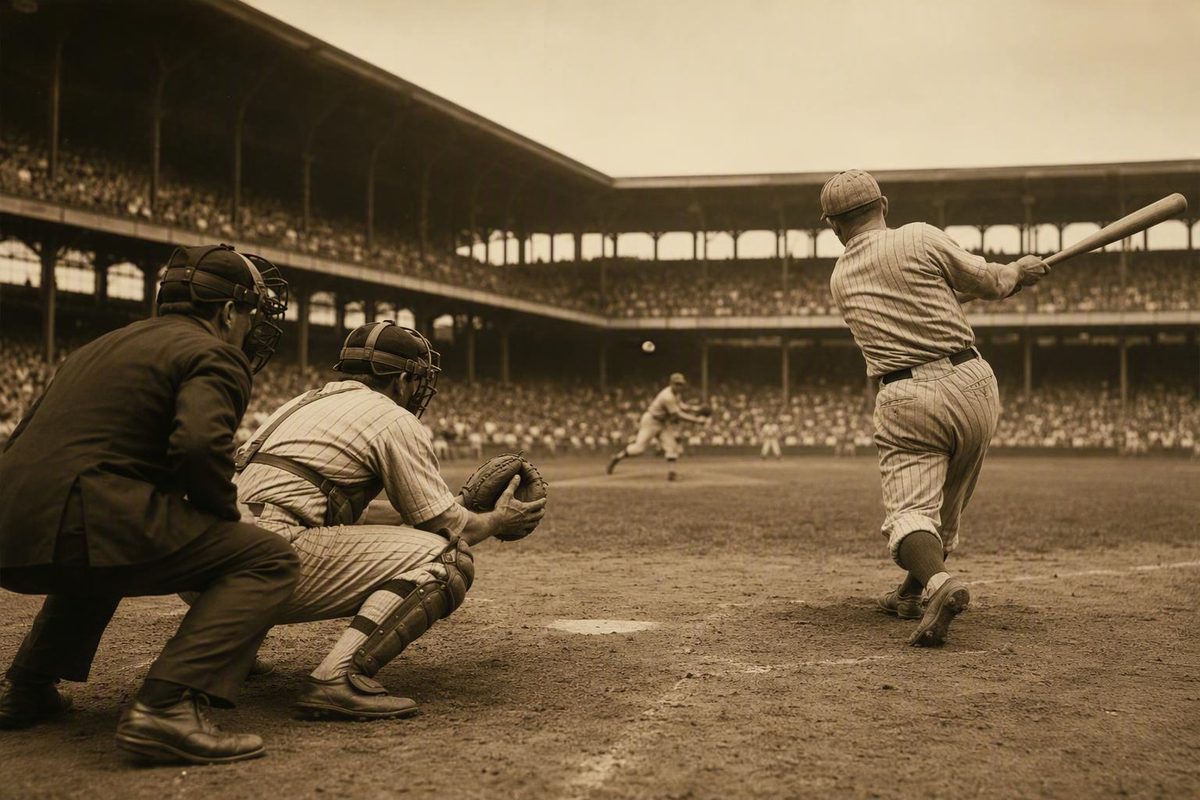
The highest-scoring game in MLB history by combined runs was the Chicago Cubs’ 26-23 victory over the Philadelphia Phillies on August 25, 1922. The teams scored 49 runs in nine innings, and Chicago nearly squandered a 25-6 lead. This is the recognized major-league record—not a claim covering every minor-league, college, amateur, youth, exhibition, or international game ever played. ESPN’s current ranking places the game first in MLB history.
Related: Retrosheet 1908 Data: Proof and Limits.
The direct answer: Cubs 26, Phillies 23
Chicago beat Philadelphia 26-23 on August 25, 1922. Add the two scores—26 plus 23—and the result is 49 combined runs.
“Highest-scoring” needs a precise definition. Here it means the most runs scored by both teams combined. It does not mean the largest margin of victory, and it does not mean the most runs scored by one club. The Cubs won by only three runs and did not set the single-team scoring record.
The game lasted nine innings and was played at Cubs Park in Chicago, the ballpark now known as Wrigley Field. A historical archive of the game identifies the venue as Cubs Park and describes the result as the post-1900 MLB record for combined runs. The archive also reproduces a contemporary account of the 26-23 game.
How a 25-6 lead became a 26-23 final
The final score suggests a game that stayed close throughout. It did not.
Chicago broke the game open with two enormous innings:
- 10 runs in the second
- 14 runs in the fourth
By the end of the fourth inning, the Cubs had built a 25-6 lead. Philadelphia then scored 17 runs over the remaining five innings, including 14 across the eighth and ninth. Chicago added only one more run but survived with a three-run victory. MLB’s historical review details the rallies and comeback.
| Phase | Chicago | Philadelphia | State of game |
|---|---|---|---|
| Second inning | 10 runs | — | First Cubs outburst |
| Fourth inning | 14 runs | — | Chicago reaches a 25-6 lead |
| After the fourth | 1 run | 17 runs | Philadelphia closes rapidly |
| Final | 26 | 23 | Cubs win by three |
The scoring profile also challenges an easy assumption about historically high totals. The game featured only three home runs, all hit by Chicago. Its 49 runs did not require the kind of home-run barrage associated with many later offensive explosions. Sustained rallies could produce a record total without filling the box score with homers. SABR documents the three home runs and Chicago’s near-collapse.
The closest challenger came from the same two teams
The nearest game in MLB’s combined-run ranking came 57 years later—and involved the same clubs in the same Chicago ballpark.
On May 17, 1979, Philadelphia defeated Chicago 23-22 in 10 innings. The 45 combined runs fell four short of the 1922 record. The Phillies led 21-9 before the Cubs erased the deficit, but Philadelphia recovered to win by one.
Mike Schmidt provided the eventual deciding run with his second home run of the game in the top of the 10th inning. The contest featured 11 home runs in all, including three by Chicago’s Dave Kingman. That power-heavy profile was markedly different from the three-homer game in 1922.
The coincidence is striking: the top two MLB games by combined runs both matched the Cubs and Phillies at the Cubs’ home park. Yet they reached their totals differently. The 1979 contest leaned heavily on home-run power; the 1922 record grew out of two huge Chicago innings followed by Philadelphia’s prolonged comeback.
The next game in the current ranking goes back to the nineteenth century. Brooklyn defeated Buffalo 28-16 on July 12, 1890, producing 44 combined runs. The game belonged to the one-season Players League, which SABR’s account treats as a major league. Its place on an MLB list therefore reflects the historical league-classification conventions used for early professional baseball.
Combined runs and single-team runs are different records
The Cubs’ 26 runs in 1922 were extraordinary, but they were not the most ever scored by one major-league team. That record was set by Chicago’s National League club in 1897.
| Record category | Game and date | Score | Relevant total |
|---|---|---|---|
| Combined runs | Cubs vs. Phillies, Aug. 25, 1922 | 26-23 | 49 combined |
| Single-team major-league record | Chicago vs. Louisville, June 29, 1897 | 36-7 | 36 by Chicago |
| Single-team high since 1900 | Texas vs. Baltimore, Aug. 22, 2007 | 30-3 | 30 by Texas |
| Extra-inning combined runs | Phillies vs. Cubs, May 17, 1979 | 23-22, 10 innings | 45 combined |
The table combines the current ESPN ranking with MLB’s review of one-team scoring records. SABR identifies the 1979 game as the highest-scoring extra-inning game through its stated statistical cutoff of the 1979 season; ESPN’s newer list still places that 45-run game second overall.
Chicago’s 36-7 victory over Louisville in 1897 produced 43 combined runs—six fewer than the Cubs-Phillies game—but established the major-league single-team mark of 36. Texas’s 30-3 victory over Baltimore in 2007 is the highest single-team total since 1900 in MLB’s review.
That distinction explains why a more lopsided score does not necessarily produce the combined-runs record. Texas outscored Baltimore by 27, but the teams combined for only 33 runs. Chicago beat Louisville by 29, yet those teams totaled 43. The Cubs and Phillies were separated by just three runs in 1922, but Philadelphia’s 23-run contribution pushed the combined score to 49.
When evaluating “highest-scoring” games, first ask which record is intended:
- Combined runs: add both teams’ scores.
- Single-team runs: count one club’s total.
- Margin of victory: subtract the losing score from the winning score.
- Extra-inning scoring: restrict the comparison to games extending beyond regulation.
These categories measure different kinds of offensive extremes and produce different record holders.
Why the scope and era labels matter
The 1922 result can safely be called the highest-scoring game in MLB history by combined runs. It cannot safely be presented as the highest-scoring baseball game of every kind. MLB rankings do not establish records for minor leagues, colleges, amateur organizations, youth competitions, international leagues, or exhibitions.
Era labels also need care. Current MLB historical rankings include nineteenth-century games, when the major-league structure did not resemble today’s American and National Leagues. The 1890 Brooklyn-Buffalo game, for example, came from the Players League. Its inclusion depends on that circuit being classified as a major league rather than on a simple comparison of teams bearing familiar modern names.
Source dates matter too. SABR’s detailed account appeared in the 1980 Baseball Research Journal, and its editor’s note says the statistics extend only through the 1979 season. It remains valuable for the details of the 1922 and 1979 games, while the newer ESPN ranking and MLB review support the record’s continued standing and the related one-team benchmarks.
Precision also avoids the unstable phrase “modern era.” For Texas’s 30-run game, “the highest single-team total since 1900” is clearer because the cutoff is explicit.
The defensible formulation is simple: the highest-scoring game in MLB history by combined runs was the Cubs’ 26-23 win over the Phillies on August 25, 1922. Its 49-run total is separate from Chicago’s 36-run single-team record, and its defining twist remains the same: a 25-6 runaway became a three-run escape.